
Cameroon
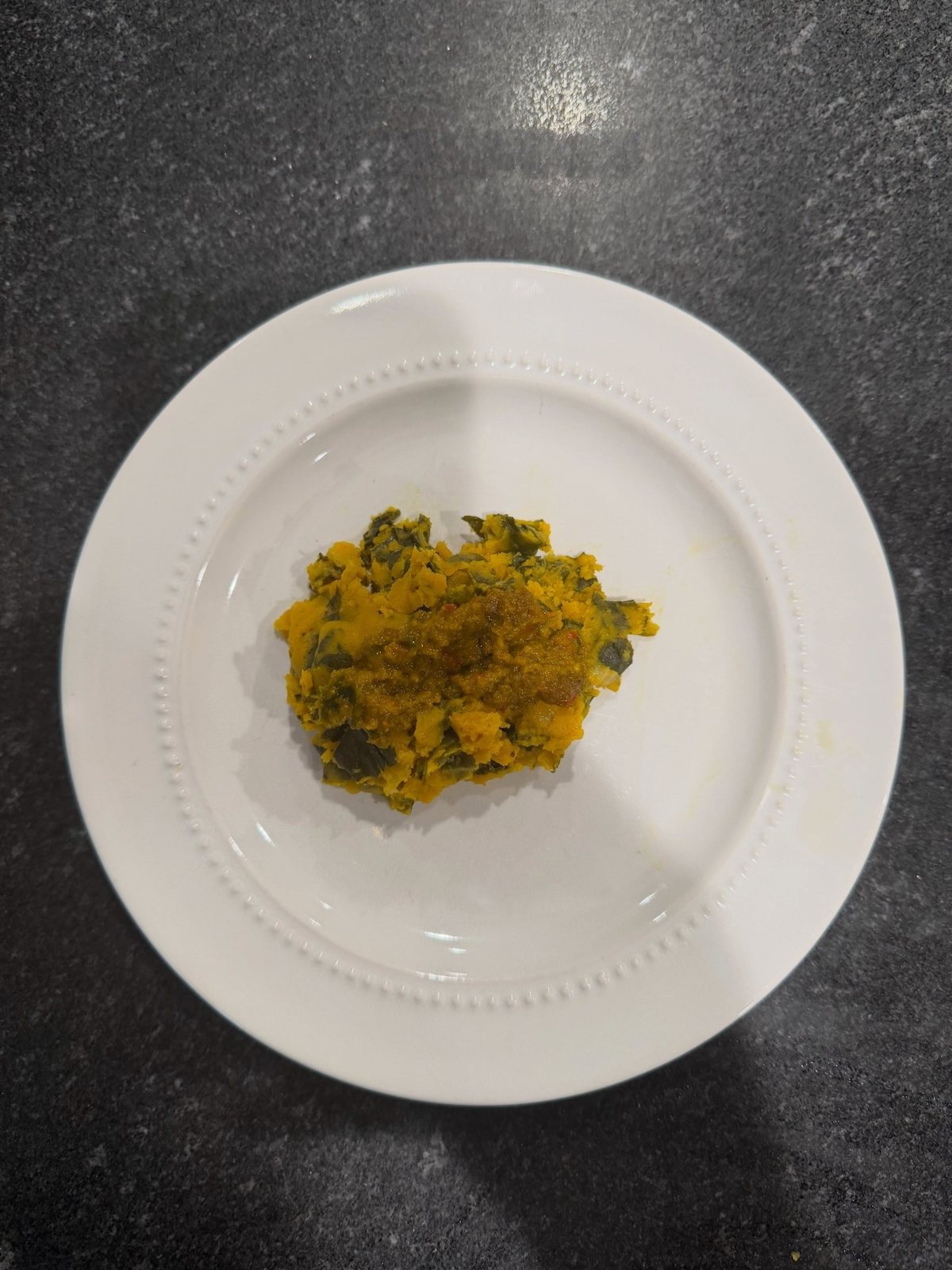
Koki beans with plantains and pepper sauce
Family score out of 5
Posted October 21, 2026
About Cameroon
Cameroon sits where West and Central Africa meet. It's called "Africa in miniature" because it packs nearly every landscape on the continent into one country: rainforest in the south, savanna, and mountains. More than 250 ethnic groups live there, with both English and French adopted as official languages.
The dish
This is Cameroon’s steamed koki with a pepper sauce and plantains. Koki is a steamed cake made from black-eyed peas, palm oil, and hot pepper. I chose koki as the Cameroon dish because it’s one of the country’s best-loved everyday dishes, especially in the southwest and coastal regions. It’s usually served with boiled ripe plantains or cassava, and it shows up everywhere from family tables to roadside stands.
Koki is not the most popular breakfast dish in Cameroon, but I really don’t like to eat fried dough too many times in a row. I couldn’t get banana leaves for steaming the dish, so I used aluminum foil instead. Despite missing the banana leaves, the palm oil, beans, and pepper kept the dish true to the original.
What we thought
Definitely not my favorite. A cakey pastry made out of bean paste with a hot pepper sauce was edible, but not something we’d ever eat again. My guess is the fried dough would have been about like makara and gotten a similar score. 1.7/5.
Ingredients and directions
Koki Beans with Boiled Plantains and Pepper Sauce
Ingredients
Beans
- 1 1/2 cup dried black eyed peas
- 1 medium yellow onion, halved
- 2 garlic cloves
- 1 habanero
- 150 g fresh spinach, or 120 g frozen chopped spinach, thawed
- ¾ cup red palm oil
- 1 chicken bouillon cube, crumbled
- 1 to 2 tsp soy sauce
- ½ tsp smoked paprika (optional)
- ½ tsp fine salt, plus more to taste
- ½ cup warm water, as needed
- Pepper Sauce
- 1 red jalapeño, stemmed and seeded
- 1 poblano, stemmed and seeded
- ¼ onion
- 1 to 2 garlic cloves
- Small piece of ginger
- ¼ tsp salt
- 3 tbsp oil
- Sriracha to taste (optional)
Plantains
- 3 ripe plantains, yellow with plenty of black spots
- 1 tsp salt for the cooking water
Directions
- Soak the beans covered in water for 2 to 4 hours. Drain.
- Pulse the beans in a blender with fresh water in 2 or 3 short bursts to crack the skins. Pour into a large bowl, cover with water, and rub the beans between both palms. Remove the loose skins that float to the top. Pour the water off through a colander tilted over the sink so the skins wash away and the beans stay behind. Repeat the pulse and rinse 2 or 3 times until about 80% of the skins are gone. This process kind of sucks.
- Blend the beans with half the onion, the garlic, and the habanero. Add water 1 tablespoon at a time, only enough to keep the blades moving. The goal is a thick, slightly gritty paste that holds a soft peak on a spoon.
- Wilt fresh spinach in a dry pan for 1 minute for about a minute. Squeeze the spinach dry.
- Finely dice the remaining onion half. Warm the palm oil in a small pan over low heat just until liquid, without letting the oil smoke. Add the diced onion and cook gently for 6 to 8 minutes until soft. Cool for 5 minutes.
- Beat the bean paste hard with a wooden spoon or hand mixer for 4 to 5 minutes. Stream in the warm oil and onion while beating. The batter turns deep orange. Fold in the spinach, bouillon, 1 tsp soy sauce, smoked paprika, and salt. If the batter is stiffer than thick pancake batter, beat in warm water 1 tablespoon at a time.
- Test the seasoning by spooning 2 tablespoons of batter into a greased mug, cover with a small plate, and microwave for 90 seconds to 2 minutes until set. Taste. If the sample tastes flat, add the second teaspoon of soy sauce. If the sample needs salt, add ¼ tsp at a time.
Steaming the Koki
- Tear 12 to 14 sheets of heavy duty foil, about 12 inches square. Grease the center of half the sheets. Press a greased sheet into a mug to form a cup, greased side up. Pour in about ½ cup of batter, leaving room at the top for expansion. Lift the foil cup out of the mug then bring the edges together over the batter and fold down twice, like closing a paper bag. Fold in the ends and crimp tight. Leave a little air inside. Set the parcel seam side down on a second sheet and wrap again.
- Set a rack in the pot and add 1 to 2 inches of water, keeping the water below the rack. Arrange the parcels seam side up with gaps between for steam. Bring to a boil, cover, and lower the heat to a steady simmer. Steam for 75 to 90 minutes. Check the water every 20 to 30 minutes and top up with boiling water from a kettle.
- At 75 minutes, open one parcel. The koki should be firm, springy, and set in the center, and a knife should come out clean. If not, reseal and steam in 15 minute increments. Rest the parcels for 10 minutes before opening.
- Make the pepper sauce by blending the jalapeño, poblano, onion, garlic, ginger, and salt into a coarse paste. Heat the oil in a small pan over medium heat, add the paste, and fry for 8 to 10 minutes, stirring often. The sauce is done when the raw smell is gone, the color darkens, and the oil separates at the edges. Add salt to taste, and sriracha for more heat.
- Boil the plantains 30 minutes before the koki finishes by cutting the ends off the plantains and then cutting each plantain into 3 sections, skin on. Simmer in salted water for 15 to 20 minutes until a knife slides in easily. Peel and serve warm.
To Serve
Open a parcel onto each plate, add plantain alongside, and spoon pepper sauce over the top. Leftover koki keeps 4 days in the fridge and reheats well steamed or in the microwave.